The Lists. Coffee, tea and wine
Hidden tea rooms of Singapore: where to book and what to order
Up a shophouse staircase, inside a national monument, seven floors above Orchard Road. Book ahead. Take the stairs. The hardest one to find is last.
By @taniameter. Updated November 2026. 5 minute read.
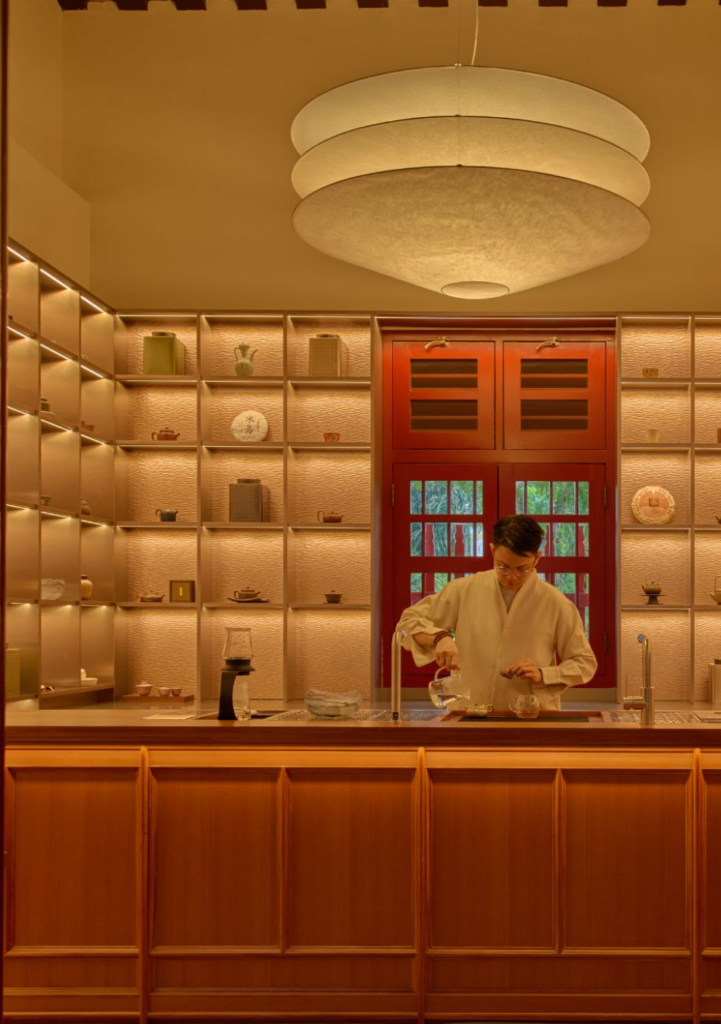
Some of Singapore’s finest tea is poured behind doors you would never think to knock on.
These are the hidden tea rooms: up a shophouse staircase, inside a national monument, high above Orchard Road. Proper gongfu tea, rare Yunnan leaves and Fujian harvests chosen by hand. Most are by appointment, and the rooms are small, so the good slots go first.
The five rooms
Inner Teahouse. 87B Keong Saik Road, Level 3. By appointment; new slots released monthly. Sessions run 90 minutes. Its founder flies to Fujian every year to choose the harvest. Best for Fujian oolong. Order: white, black and oolong teas from Fujian.
Golden Seed. Millenia Walk #01-72. Daily 11.30am to 8.30pm. Walk-ins welcome, booking advised. The easiest of the five to get into, and the one to start with. Order: The Grand Tea Experience, with aged pu-erh.
Atelier Cherub. Kampong Glam. By appointment; book a week ahead. Chaozhou gongfu tea in a conserved shophouse. Nobody rushes you here. Order: Chaozhou gongfu tea.
Jing Studio. House of Tan Yeok Nee, Dhoby Ghaut. Eight seats; book ahead. A tea salon inside a national monument. You have seen it online. Now book one of its eight seats. Order: Coco Pulut pu-erh and Ember Road black tea.
Tea Room by Ki-setsu. Orchard Plaza #07-14. By appointment at tearoom.com.sg. From S$138 for two. Seven floors up, among tailors and karaoke lounges. No walk-ins. The hardest one to find, and the most rewarding. Order: a guided Yunnan tea session.
Why these rooms are hidden
None of these tea rooms is hidden by accident. Each one has chosen discretion, and it shapes the experience.
Tea, done properly, needs quiet. Gongfu brewing involves many short infusions from the same leaves, each one tasting slightly different, and you only notice those changes when you are paying attention. A shopfront on a busy street, with people coming and going, makes that almost impossible. Up a staircase, behind a door, or seven floors above Orchard Road, the city falls away and the tea gets your full attention.
Small rooms also mean small numbers. A tea master can only guide a handful of guests at once. That is why most of these rooms work by appointment, and why the good slots go first. It is not exclusivity for its own sake. It is the only way to do this well.
And there is something special about the act of finding them. Climbing the stairs at Inner Teahouse on Keong Saik Road, or walking past tailors and karaoke lounges at Orchard Plaza to reach Tea Room by Ki-setsu, is part of the ritual. By the time you sit down, you have already slowed down.
A short guide to Chinese tea
Most of the teas you will meet in these rooms come from China, and they fall into a handful of families. Knowing them makes any tea menu easier to read.
White tea. The least processed of all, simply withered and dried. Delicate, sweet and gently floral. Fujian is its home, and Inner Teahouse pours it.
Green tea. Heated soon after picking to stop oxidation, which keeps it fresh, grassy and vegetal.
Oolong. Partially oxidised, anywhere from light and floral to dark and roasted. Oolong is the classic tea for gongfu brewing because it changes so beautifully over many infusions. Fujian oolong is Inner Teahouse’s speciality.
Black tea. Called red tea in China, for the colour of the liquor. Fully oxidised, rich and malty, sometimes with notes of honey or cocoa. Jing Studio’s Ember Road black tea is a lovely example.
Pu-erh. A fermented tea from Yunnan, often aged for years, sometimes decades. Earthy, deep and smooth, with a flavour that develops over time like a fine wine. Golden Seed’s aged pu-erh and Jing Studio’s Coco Pulut Pu-erh are the ones to try.
If you are new to all of this, start with an oolong. It is the most forgiving and the most rewarding.
What gongfu tea is
Several of these rooms, Atelier Cherub in particular, specialise in gongfu tea, and it is worth knowing what that means before you go.
Gongfu cha roughly translates as tea made with skill. It comes from the Chaozhou region of southern China, and it is a method rather than a type of tea. A small pot or covered bowl, called a gaiwan, is filled generously with leaves. Hot water is poured over them for only a few seconds, then the tea is poured out into tiny cups. The process is repeated again and again, sometimes more than ten times.
Each infusion tastes different. The first is often light and aromatic, the middle ones fuller and sweeter, the last ones soft and mellow. Following those changes is the pleasure of it, and why a gongfu session is closer to a tasting than to drinking a cup of tea.
The equipment matters too: a warmed pot, a tea tray to catch spills, a pitcher to even out the strength, and cups small enough to drink in two or three sips. In a good tea room, watching the host move through these steps is calming in itself.
Where, when and what to order
| Inner Teahouse | 87B Keong Saik Road, Level 3. By appointment, new slots monthly. Order white, black and oolong from Fujian. |
|---|---|
| Golden Seed | Millenia Walk #01-72. Daily 11.30am to 8.30pm, walk-ins welcome. Order The Grand Tea Experience, aged pu-erh. |
| Atelier Cherub | Kampong Glam. By appointment, book a week ahead. Order Chaozhou gongfu tea. |
| Jing Studio | House of Tan Yeok Nee. Eight seats, book ahead. Order Coco Pulut pu-erh, Ember Road black tea. |
| Tea Room by Ki-setsu | Orchard Plaza #07-14. By appointment via tearoom.com.sg, from S$138 for two. Order a guided Yunnan tea session. |
Three more worth knowing
Tea the Gathering. A travelling teahouse. Currently on hiatus. Watch their Instagram for the next one.
Pek Sin Choon. The tea merchant tour. Bookable on Klook.
Tea Bone Zen Mind. 99C Killiney Road. Now a tea store. Call 9644 4212 before you go.
Tea room etiquette
Book, and arrive on time. Sessions are timed, and rooms are small. Inner Teahouse runs 90-minute sessions and releases new slots monthly.
Skip strong perfume. Aroma is half the experience of fine tea, for you and for the guests around you.
Let the host pour. In a guided session, the host controls the brewing. Relax and enjoy it.
Tap the table to say thank you. A traditional Cantonese and southern Chinese gesture: tap two fingers lightly on the table when your cup is refilled.
Ask to buy what you loved. Most tea rooms sell their leaves. Taking some home is the best souvenir, and it supports a small business.
Brewing fine tea at home
A visit to one of these rooms often ends with a bag of leaves. Here is how to make them taste nearly as good at home.
Use more leaf than you think, for less time. For oolong and pu-erh, gongfu style means a generous amount of leaf in a small vessel, with infusions of only ten to thirty seconds. You will get many cups from the same leaves.
Match the water to the tea. Delicate white and green teas prefer water well below boiling, around seventy to eighty-five degrees. Oolong, black tea and pu-erh can take water just off the boil.
Rinse first. For oolong and especially pu-erh, a quick rinse, pouring hot water over the leaves and discarding it, wakes them up and washes away dust.
Use filtered water. Tea is mostly water, and heavily chlorinated or hard water flattens its flavour.
Store leaves well. Keep tea sealed, away from light, heat and strong smells. Most teas are best within a year. Pu-erh is the exception: stored properly, it continues to develop for years, which is why aged pu-erh is so prized.
Invest in a gaiwan. A simple lidded bowl costs little and lets you brew almost any tea gongfu style. It is the single piece of equipment that will change your tea the most.
Where to start
If this is your first tea room, begin with Golden Seed at Millenia Walk, the only one of the five that welcomes walk-ins, and order The Grand Tea Experience. Once you are hooked, book a session at Inner Teahouse for Fujian oolong, then work your way towards Tea Room by Ki-setsu. It is the hardest to find, and by the time you reach it, you will understand why it was worth the climb.
Good to know
Do Singapore tea rooms take walk-ins?
Golden Seed at Millenia Walk welcomes walk-ins. Inner Teahouse, Atelier Cherub, Jing Studio and Tea Room by Ki-setsu are by appointment, and the rooms are small.
How much does a tea session cost in Singapore?
Tea Room by Ki-setsu starts from S$138 for two for a guided Yunnan session. Prices elsewhere vary by tea and session length.
Where can I drink tea inside a national monument?
Jing Studio is inside the House of Tan Yeok Nee near Dhoby Ghaut, with eight seats.
Save this, and book ahead. Send it to the friend who still thinks tea comes in a bag, and tell Tania which tea room she should find next on Instagram.
More from the magazine
Taniameter
Taniameter. Singapore food, drinks, travel and tables. Follow @taniameter on Instagram.
© 2026 Taniameter. Some links on this site are affiliate links; Taniameter may earn a commission at no extra cost to you.