Dinner at Mine. The hosting series
Once a month, Tania hosts a dinner at home, and every time someone asks where everything came from. Here is the whole list.
By @taniameter. Updated November 2026. 12 minute read.


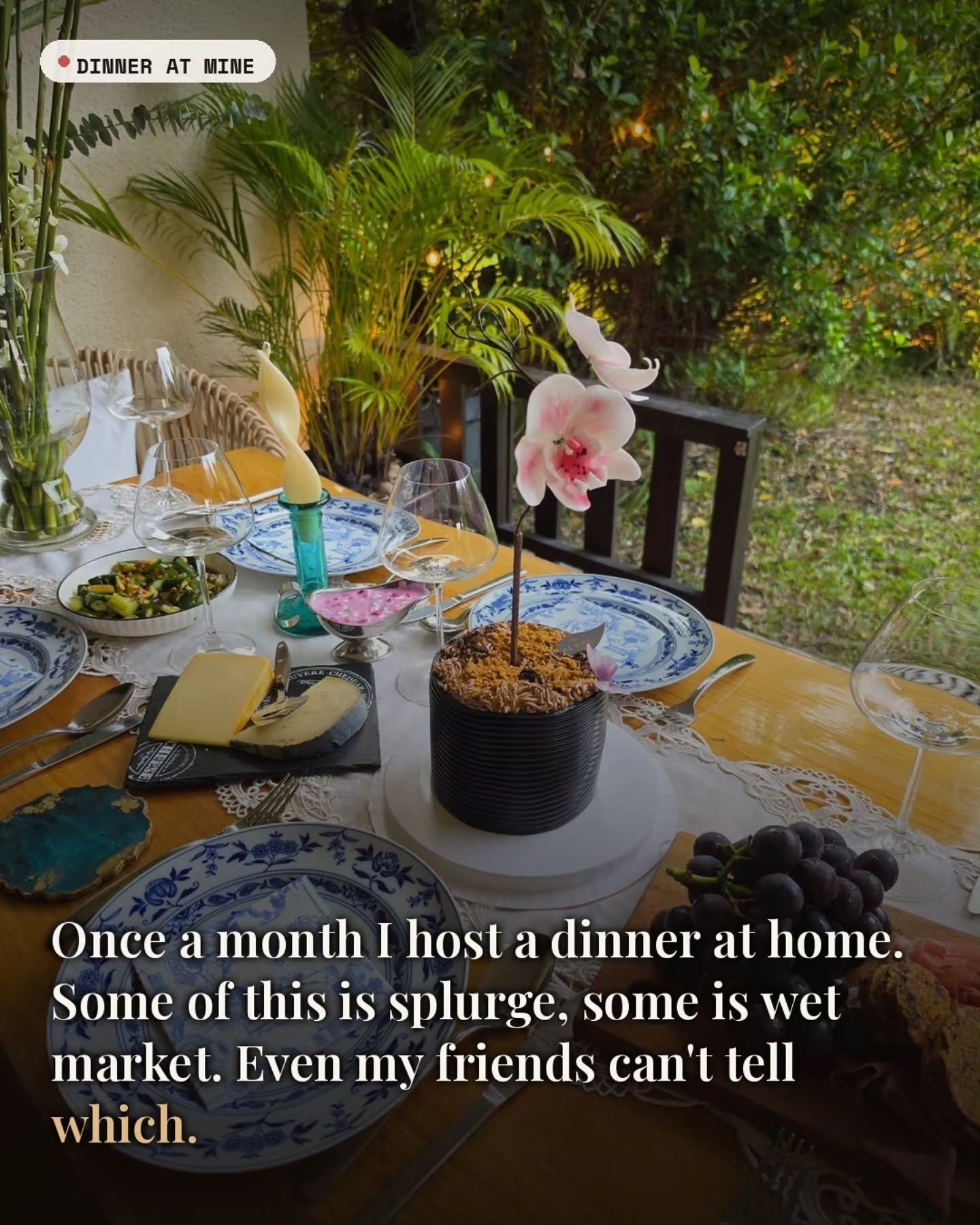
The garden table: orchids, blue-and-white plates and collected pieces. Photograph by Tania.
To me, a dinner party is an expression of love and a little playful art. I love to mix and match, so on my table a S$5.80 plate can sit beside something flown in from a sturgeon farm in Poland.
Once a month I host a dinner at home, and every time, someone asks where I got everything. So this is the whole list: the two or three splurges, the finds, the market runs, and what I would buy again.
The August table was the garden table, and it did not go to plan. The oven gave up through course three. I plated what I had, poured another glass, and nobody minded.
The centrepiece was the cake. An orchid cake from Pulse Patisserie, made to look exactly like a potted orchid, every petal sugar and the whole thing edible. It was the first splurge, and it did the job of flowers and dessert at once.
The second splurge was the bottle. Crusoe Treasure, via Bryanic Wines: a red aged on the sea floor off Spain and brought up barnacles and all. It changes every fifteen minutes once it is open, so we kept going back to it. Quote Tania to the distributor for the friends-and-family price.
Everything else was found. The blue-and-white Vista Alegre plates came from a closing-down sale, still unused. The wine glasses and the lace runner came from Shopee. The flowers were S$18 from Soon Heng at Tiong Bahru wet market, chosen that morning.
The food was mine. Prawns and chicken from Redhill market; the dips, the fritters and the mains made in my kitchen.


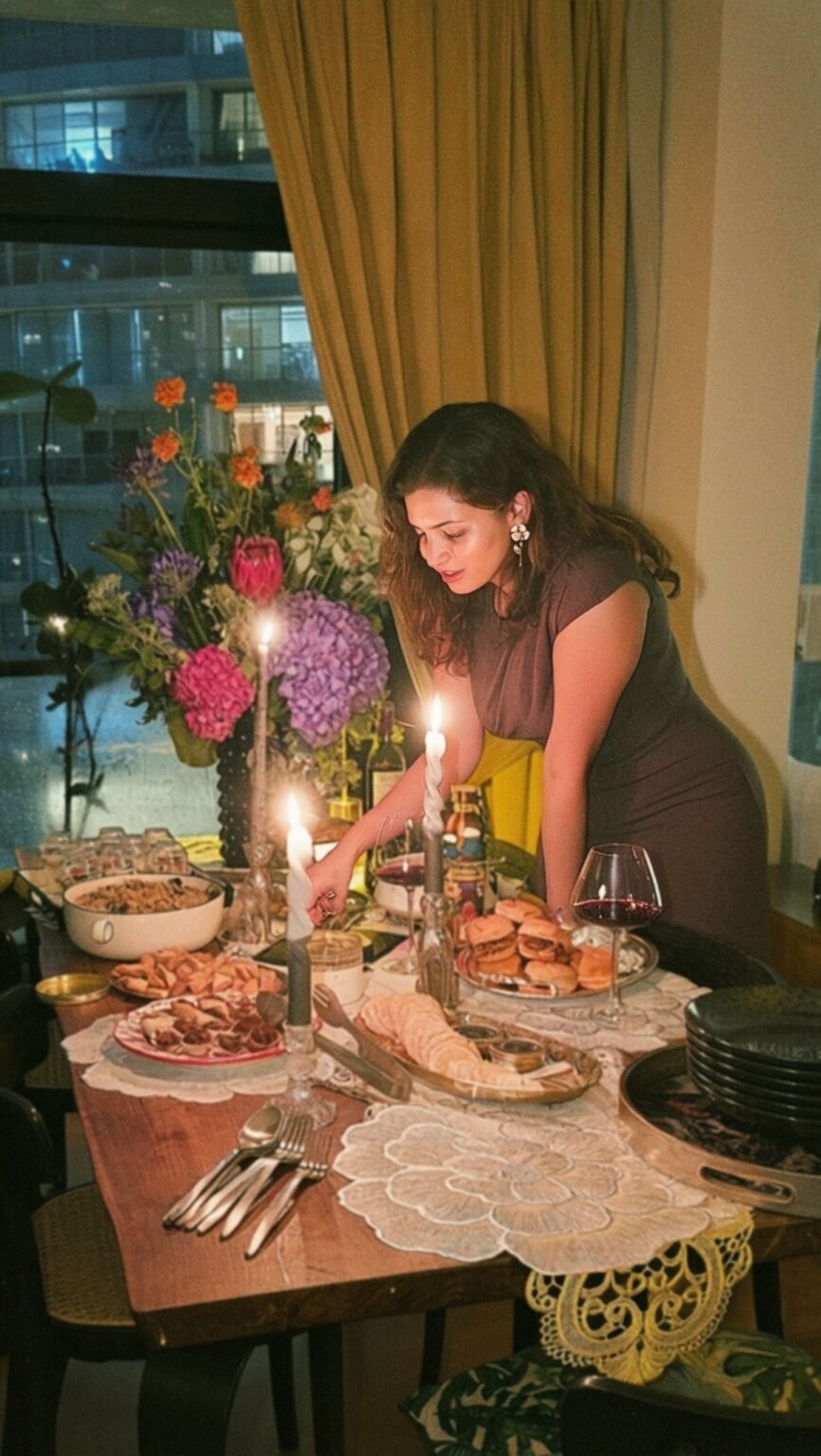
The second table was darker and lazier, in a good way. Candles instead of the overhead lights, a feast from ARG BBQ, the Argentinian barbecue caterer, delivered to the door, and caviar to open. Delivered is my favourite kind of cooking.
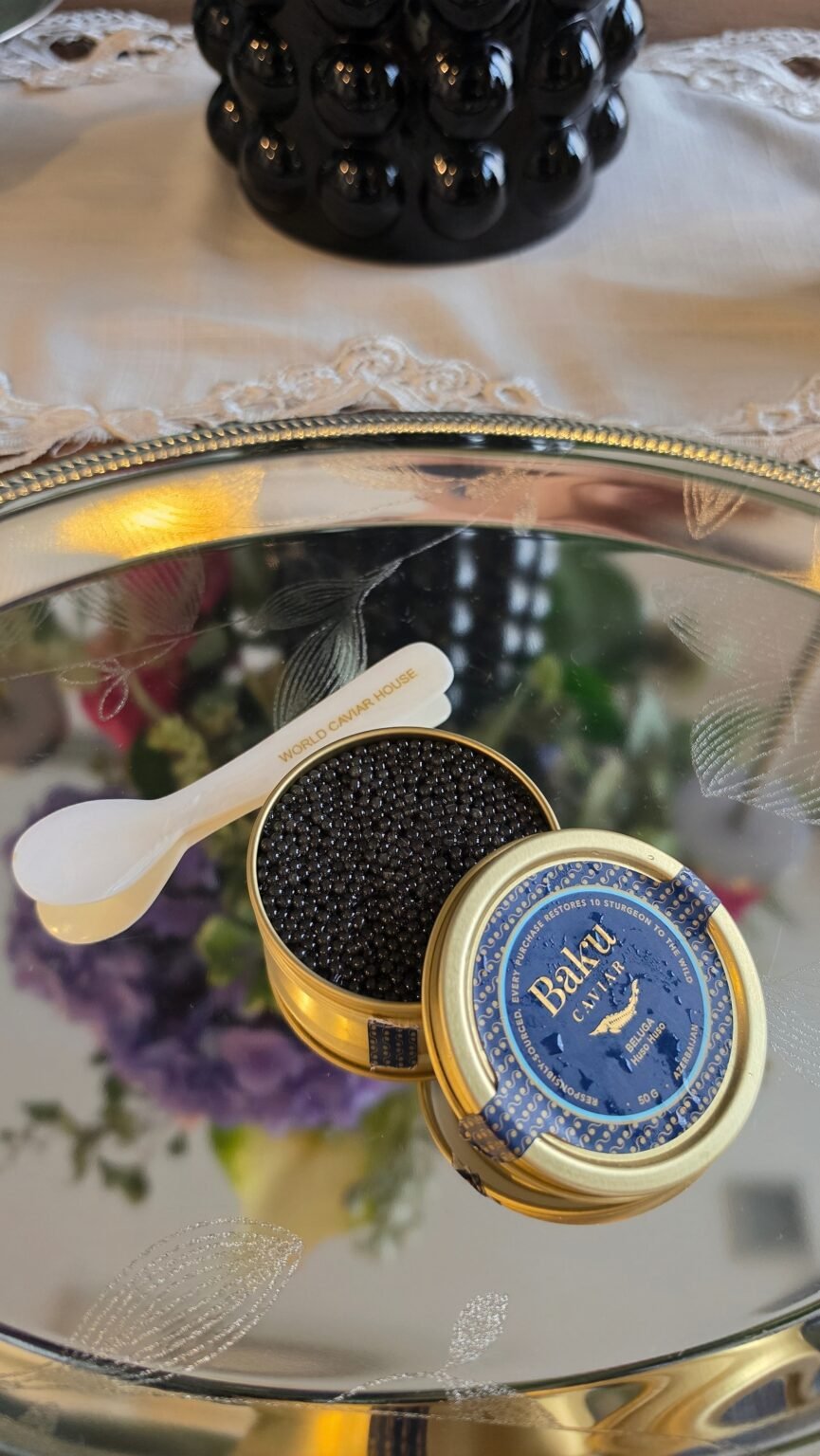
The caviar was Antonius. Caviar is the salted roe of the sturgeon, a fish that has been swimming since the age of the dinosaurs, and Antonius raise theirs for eight to ten years before a single tin is filled. I served it cold, on ice, with a mother-of-pearl spoon.
The drink was a Negroni. Cherrapunji Craft Gin is distilled from the rain of Meghalaya, one of the wettest places on earth, and won Double Gold at the 2025 SIP Awards. It is good enough to pour neat, but I made Negronis: mandarin, juniper and a little smoke.
The table mixed the splurge and the steal again. The Ava set by Jazz Up Co. held it together, Maison Curio glasses brought the detail, and the S$5.80 plate sat right next to the caviar. Nobody noticed. The flowers came from the same Tiong Bahru stall, bought that morning.


Dinner at Mine began with a simple frustration. Every time I hosted, friends asked where the plates came from, where I bought the flowers, which bottle we were drinking. I answered the same questions over and over, and realised the answers were worth sharing properly.
So once a month, I set a table at home, cook or order a feast, invite people I love, and document everything: the tableware, the food, the drinks, the flowers, and what each one cost. The aim is not to show off a perfect home. It is to show that a beautiful table is within reach, and that the most memorable evenings rarely come from the most expensive choices.
The series is also a love letter to Singapore’s small makers and markets. The flower stalls of Tiong Bahru, the seafood at Redhill market, independent patisseries, local distributors with unusual wines, homeware shops that care about design. Every table is a chance to point you towards them.
It also started with cutlery. For years mine was a scratched, dull set I had stopped noticing. When I finally replaced it with a matte black set from Jazz Up Co., the same food, the same friends and the same room suddenly looked like a table set on purpose. Every small detail adds something to the evening: the weight of a fork, the way candlelight catches the rim of a glass, whether the plates feel chosen or merely available.
Choose two splurges, not ten. One showpiece for the table and one bottle worth talking about. On the garden table that was the orchid cake and the sea-floor wine. Everything else can be found, borrowed or bought on Shopee.
Keep one thread running through. One colour, one material or one mood: blue and white, black and gold, or candlelight and white linen. With a thread, almost any combination looks intentional.
Buy flowers the morning of. A wet market stall will do more for the table than a florist’s arrangement at five times the price.
Watch for closing-down sales. That is where good porcelain goes to find a second home.
Let someone else cook one course. A great delivery feast frees you to host rather than plate.
Mix on purpose. Nobody at my table could tell which piece was which, and that is what you are aiming for.
Flatware first. If you change only one thing, change the cutlery; it is the piece every guest touches all evening. Look for weight, because light cutlery feels flimsy however pretty it is, and for 18/10 stainless steel, the grade that resists rust and keeps its shine. Polished silver reads formal, brushed hides fingerprints, gold adds warmth for celebrations, and matte black, like my Jazz Up Co. set, looks dramatic against white porcelain and linen. Buy at least eight place settings, plus spare teaspoons and dessert forks. You always need more than you think.
Plates and porcelain. Porcelain is fired at high temperatures, which makes it thin, strong and slightly translucent. Bone china is a lighter, finer porcelain made with bone ash. Stoneware is thicker and more rustic, and suits relaxed dinners. If you are starting from scratch, buy plain white dinner plates, because white makes food look its best, then layer patterned side plates and bowls over time. Blue and white is especially forgiving: pieces from different makers sit happily together because the colours speak the same language.
Glassware. Glasses catch the light, make a sound and change how a drink tastes. Choose thin rims; a thick, rolled rim makes even a good wine feel clumsy. You do not need a glass for every grape. One good all-purpose wine glass, a set of tumblers and a few coupes or flutes will cover almost every dinner. Mine are Shopee glasses for every day and Maison Curio for special dinners.
Linens and candles. A runner, a tablecloth or linen napkins transform a bare table, and a lace runner adds texture for very little money. Turn off the overhead lights and use candles at different heights. Twisted or tapered candles become decoration in their own right.

Lay the linen first. Place a dinner plate at each setting, with a side plate to the upper left. Forks go on the left of the plate, knives and spoons on the right, knife blade facing in. Work from the outside in: the cutlery for the first course sits furthest from the plate.
Glasses go above the knife, water glass first and the wine glass beside it. The napkin goes on the plate or to the left. Candles and flowers go on last, and stay low so guests can see each other.
Then sit where a guest will sit and look at the table from there. Move things until it feels ready.
Caviar intimidates people more than it should. It is one of the simplest luxuries to serve, as long as you follow a few rules.
Keep it cold. Store the tin in the coldest part of the fridge and serve it on ice. Open it only shortly before guests arrive.
Use the right spoon. Metal can give caviar a slight metallic taste, which is why mother-of-pearl, bone, horn or even wooden spoons are traditional.
Keep the accompaniments simple. Blinis, lightly toasted brioche or plain crackers, with crème fraîche on the side. Chopped egg, shallot and chives are classic, but use them sparingly. The caviar should lead.
Plan your quantity. As a tasting, around ten to fifteen grams per person is plenty. For a more generous course, allow around thirty grams each.
Try a bump. Placing a small spoonful on the back of your hand, between thumb and forefinger, and eating it straight is the purest way to taste caviar. Your skin warms it slightly, which opens up the flavour. It is also a wonderful icebreaker at a dinner party.
Pour something crisp. Champagne, an ice-cold vodka, or a dry Negroni, which is what I served with Antonius caviar on the candlelit table.
The Negroni is the perfect dinner party drink. It is easy to batch, it looks beautiful in candlelight, and its bitterness wakes up the appetite before dinner.
The classic recipe is equal parts gin, Campari and sweet vermouth, stirred over ice and served with a slice of orange. I made mine with Cherrapunji Craft Gin, and the result was mandarin, juniper and a little smoke: brighter than a London dry gin version, and so flavourful I have no regrets.
To batch for eight, mix 240ml each of gin, Campari and sweet vermouth in a jug, add 120ml of water to account for the dilution you would get from stirring, and chill it for a few hours. Pour over a single large ice cube per glass and add a twist of orange peel. Your guests get a perfect drink in seconds, and you never leave the table.
Both of these tables used flowers from a single stall at Tiong Bahru wet market, bought the morning of the dinner. On the August table, they cost S$18.
Go early. The best stems are gone by mid-morning.
Choose one or two varieties. A mass of one flower looks more deliberate than a mixed bunch.
Keep them low. Guests should be able to see each other across the table.
Use what you have. Glasses, jugs, teacups and small bottles all make lovely vases, and several small arrangements down the table often look better than one large one.
Add something living. A potted orchid, or, in my case, a cake that looked exactly like one, makes a striking centrepiece that lasts beyond the evening.
The best-looking table means nothing if the host is frantic. This is the rhythm I follow for every Dinner at Mine, and it is the reason I get to enjoy my own parties.
Two days before. Plan the menu around one dish that can be made ahead. Order anything special: a cake, a delivered feast, the wine. Count plates, glasses and cutlery for every course, and wash anything that has been sitting in a cupboard.
The day before. Set the table. It sounds early, but it removes the most stressful job from the day itself. Iron the napkins, place the candles, and chill the white wine and Champagne. Make the dips, sauces and desserts that improve overnight.
The morning of. Buy flowers and fresh seafood while they are at their best. Arrange the flowers low and keep them in a cool corner until evening.
Two hours before. Cook what must be cooked fresh. Take the red out of the fridge so it can warm slightly. Clear the kitchen as you go.
Thirty minutes before. Light the candles, dim the lights, put on music and pour yourself a glass. Guests should arrive to a host who is ready, not one who is still plating.
When something goes wrong. It will. My oven gave up halfway through course three. Plate what you have, laugh about it, and pour another glass.
Nobody needs to buy a whole tableware collection at once. I built mine slowly, and the table is better for it.
First, the foundation. Eight plain white dinner plates, eight all-purpose wine glasses, eight water tumblers and a full set of cutlery you love holding. With these alone you can host well.
Next, texture. Linen napkins, a runner and candles in different heights. They change the mood of a table more than anything else and cost relatively little.
Then, personality. Patterned side plates or bowls, collected one or two at a time from markets, closing-down sales and small homeware shops. This is where the table starts to look like yours.
Finally, the treasures. One special set of glasses, a serving platter you will use for years, or a piece with a story. Buy these when you find them.
Care. Hand wash fine glassware and anything with a matte, gold or coloured finish, because dishwashers dull special coatings over time. Dry cutlery straight away to avoid water spots. Store glasses upright and keep fine porcelain separated with soft pads so it does not chip.
After two tables, these are the pieces that earned their place.
The Shopee wine glasses and lace runner. Without hesitation. They cost little, they photograph beautifully, and nobody at the table guessed where they came from. If you are building a hosting kit from nothing, start here.
The Vista Alegre plates. Finding them unused at a closing-down sale was luck, but it taught me to always look. Good porcelain outlasts trends, and blue and white mixes with almost anything.
The Maison Curio glasses. For special dinners, yes. They lift the table instantly, and pairing them with everyday plates is the kind of contrast that makes a table feel collected rather than bought.
The Ava set from Jazz Up Co. It held the candlelit table together, and it sits happily beside my cheaper pieces.
Wet market flowers. Every single time. S$18 from Tiong Bahru did more for the room than any arrangement I have ordered.
The splurges. The orchid cake and the wine aged on the sea floor were worth it precisely because they were the only splurges. One or two showpieces give the evening a story; more than that and the table starts to feel like a showroom.
If these tables have made you want to host, start small. Invite four people rather than ten, choose one dish you can make well, and buy one thing for the table that you have always wanted. Set the table the night before, buy flowers that morning, and light the candles before anyone arrives. Then sit down with your guests. The best dinner parties are the ones where the host is at the table, not in the kitchen. And when someone asks where you got the plates, you will understand why this series exists.
Shop the story
The pieces from these two tables, gathered in one place.
Some of these are affiliate links. If you buy through them, Taniameter may earn a commission at no extra cost to you.
What is Dinner at Mine?
A monthly hosting series by @taniameter: a table set at home in Singapore, with every source for the tableware, flowers, food and drinks shared.
Where can I buy affordable tableware in Singapore?
The wine glasses and lace runner came from Shopee, the Vista Alegre plates from a closing-down sale, and one plate cost S$5.80.
Where can I buy cheap flowers in Singapore?
At the Tiong Bahru wet market. One stall supplied both tables, and the August flowers cost S$18, bought the morning of the dinner.
How much caviar per person for a dinner party?
About 10 to 15 grams each as a tasting, or around 30 grams each for a more generous course.
How do you batch Negronis for eight?
Mix 240ml each of gin, Campari and sweet vermouth with 120ml of water, chill for a few hours and pour over one large ice cube with orange peel.
How do you set a table for a dinner party at home?
Lay the linen, then a dinner plate at each setting with a side plate to the upper left. Forks on the left, knives and spoons on the right, working from the outside in. Glasses above the knife, napkin on the plate, and low candles and flowers last.
What tableware do you need to host a dinner party?
Dinner plates, side plates, flatware, wine and water glasses, a runner or tablecloth, napkins, candles and a low flower arrangement. Eight place settings is a sensible minimum.
How far in advance should you set the table?
The night before. Buy flowers and fresh seafood the morning of the dinner.
Where are the Dinner at Mine glasses from?
Everyday wine glasses from Shopee, and special-occasion glasses from Maison Curio.
New table every month. Send this to the person you would set this table for, and follow the series on Instagram.
More from the magazine
Taniameter
Taniameter. Singapore food, drinks, travel and tables. Follow @taniameter on Instagram.
© 2026 Taniameter. Some links on this site are affiliate links; Taniameter may earn a commission at no extra cost to you.