Dining. With a view
SUSHISAMBA Singapore: a Peruvian takeover 52 floors up
Fifty-two floors above the city, Singapore looks like it is on fire at golden hour. So, on this particular Tuesday, did dinner.
By @taniameter. Updated November 2026. 9 minute read.
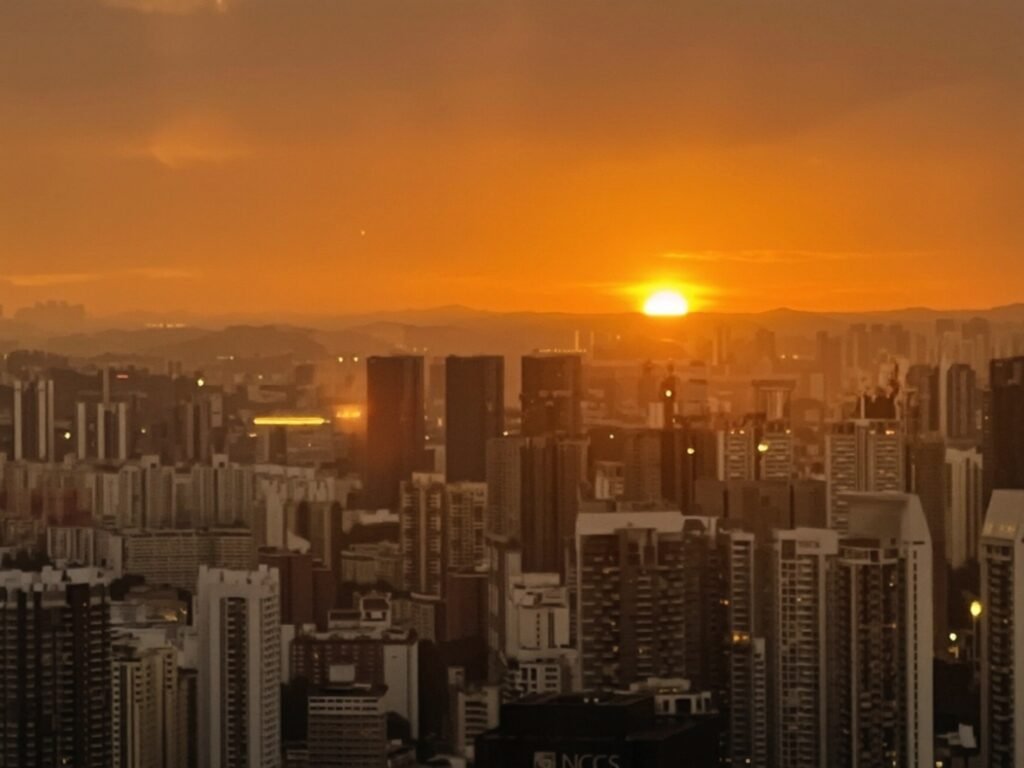
Fifty-two floors above the city, Singapore looks like it is on fire at golden hour. The towers catch the last of the sun, the bay turns copper, and for a few minutes you understand why people pay for a view.
SUSHISAMBA sits on level 52 of Capital Tower, and sitting there feels like the top of the world. But the view was not the reason I went on this particular Tuesday. The restaurant had invited Chef Daniel and Tamara Chavez of Canchita to bring their Peruvian energy into SUSHISAMBA’s Japanese, Brazilian and Peruvian world for a special menu.
Three continents, one table. Here is what we ate, what the dishes are, and why Nikkei cooking, the meeting point of Japan and Peru, is one of the most exciting cuisines to eat in Singapore right now.
Level 52
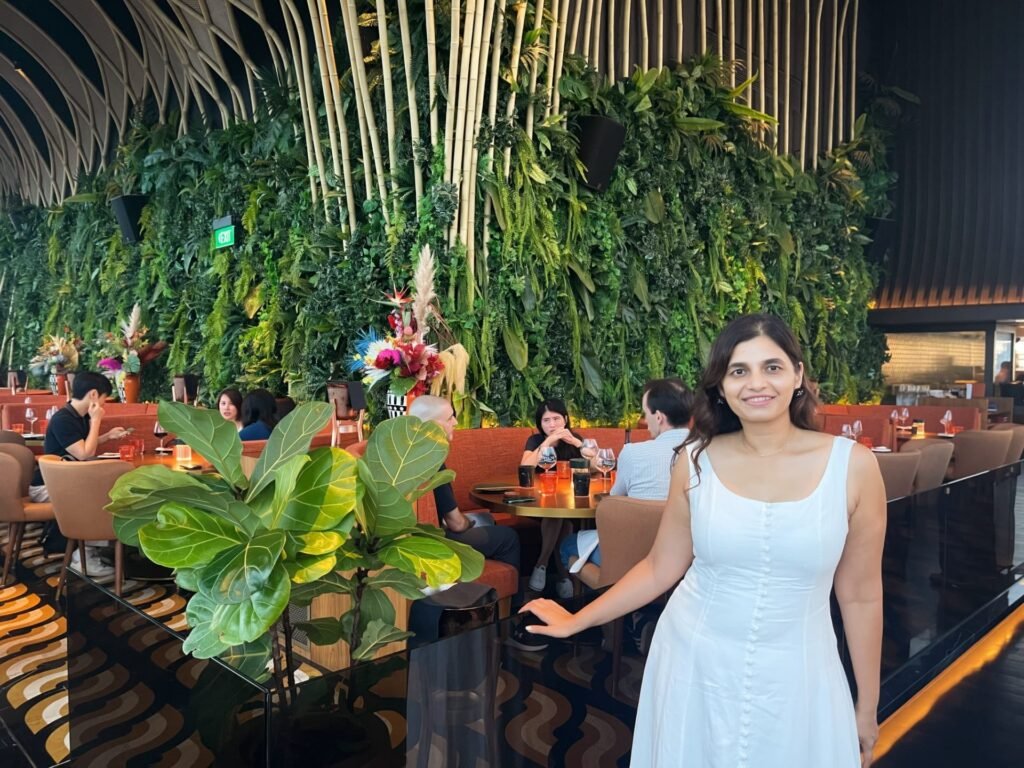
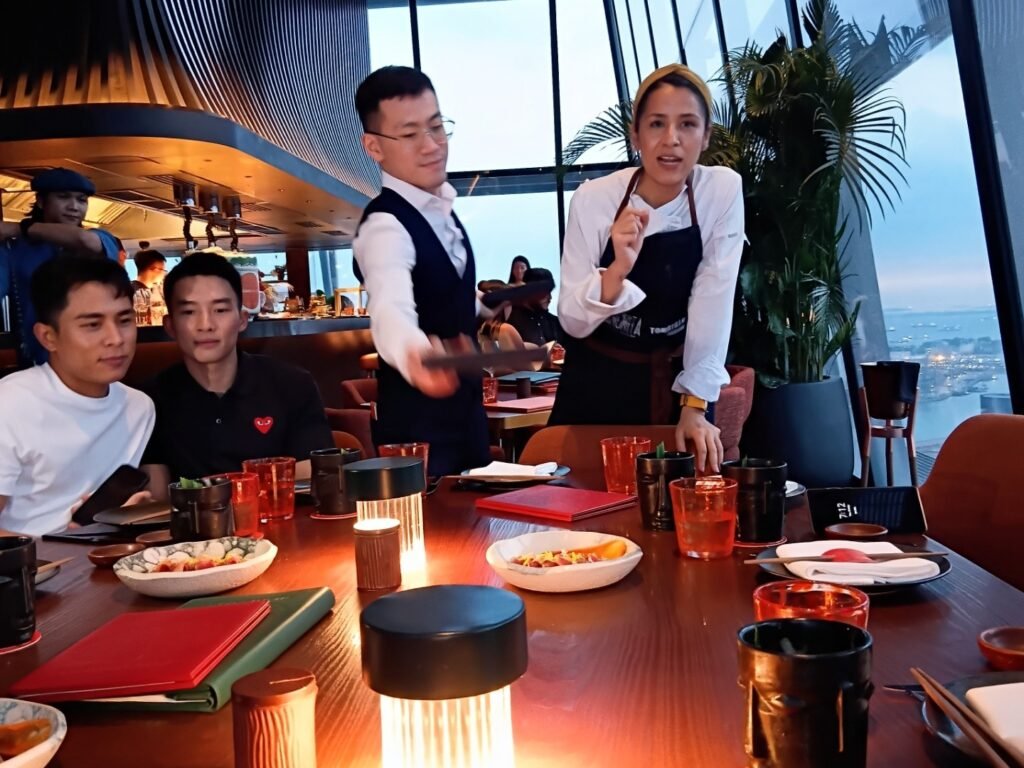
There is no subtle way to describe the setting. SUSHISAMBA is on level 52 of Capital Tower, and the windows look out across the city in every direction. Come at golden hour if you can. The light in the half hour before sunset is the most beautiful of the day, and watching the city switch from gold to glitter is worth timing your booking around.
The room itself is lively rather than hushed. It is a place for a celebration, a group of friends, or a Tuesday you want to feel like a Friday. That energy suits the food, which is bold, bright and made for sharing.
A slow, dressed-up Tuesday night is how I would describe it. As I settled in, the menu began to arrive, and it did not slow down for hours.
What Nikkei cooking is
To understand this menu, you need to know a little about Nikkei. In the late nineteenth century, Japanese immigrants began arriving in Peru. Over generations, they cooked with what they found: Peruvian chillies, limes, corn and potatoes, alongside the techniques and seafood sensibility they brought from Japan. The result is a cuisine that is neither fully Japanese nor fully Peruvian, but something new.
Nikkei food tends to be bright with citrus, warm with chilli, and precise in its handling of fish. Think of raw fish sliced the Japanese way and dressed with a Peruvian leche de tigre, or robata-grilled skewers seasoned like Lima street food.
SUSHISAMBA has built its identity on this crossover, adding Brazilian influence to the mix. Inviting a Peruvian chef team into that kitchen was a way of turning the volume up on the Peruvian side of the story.
The menu, plate by plate
Coconut and pandan pisco sour. To start. Pisco is Peru’s grape brandy, and the pisco sour is its national cocktail. This version added coconut and pandan, a nod to Southeast Asia that made perfect sense in Singapore. Creamy, fragrant and dangerously easy to drink.
Causa de calamarcitos. A Peruvian classic, with baby squid. Causa is a chilled dish of seasoned yellow potato, layered or shaped and topped with something good. Here it was baby squid. Soft, cool and gently spicy, it is one of the most comforting dishes in Peruvian cooking.
Tiradito Nikkei. Raw fish, Japanese cut, Peruvian dressing. Tiradito is Peru’s answer to sashimi: thin slices of raw fish dressed with a citrus and chilli sauce. The Nikkei version leans into Japanese precision, and it was the dish that best captured the spirit of the evening.
Moriawase nigiri
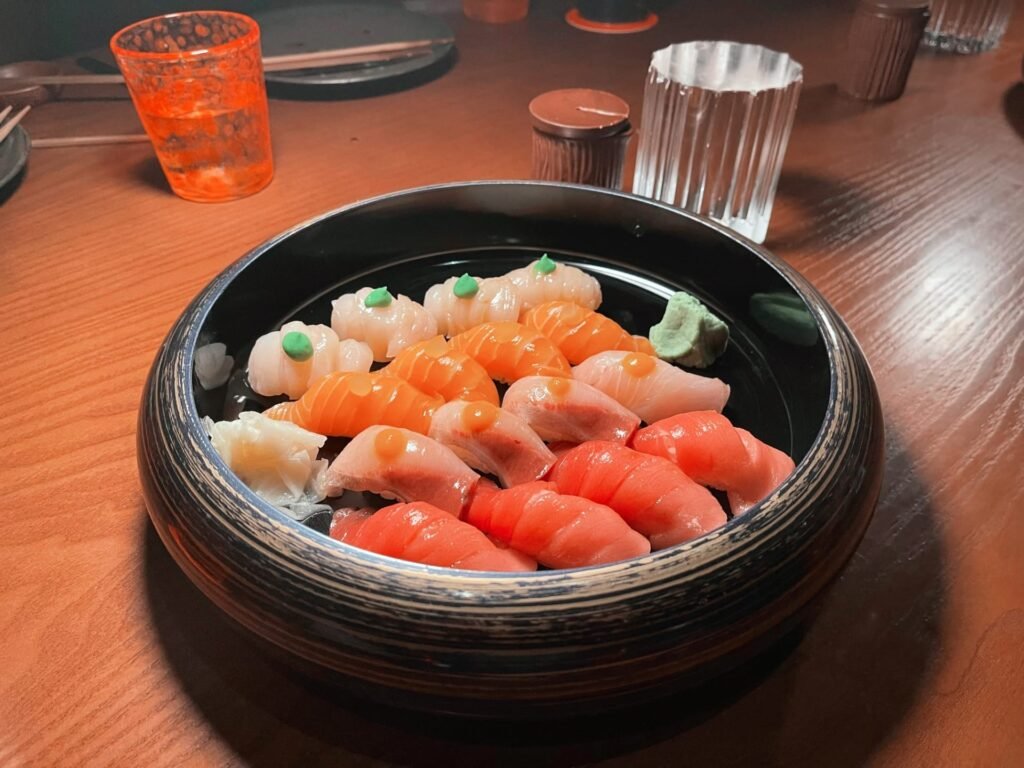
An assortment of nigiri.
The most pristine plate of the night. A reminder that, behind the fusion, this is a kitchen that takes its sushi seriously.
White miso Chilean sea bass
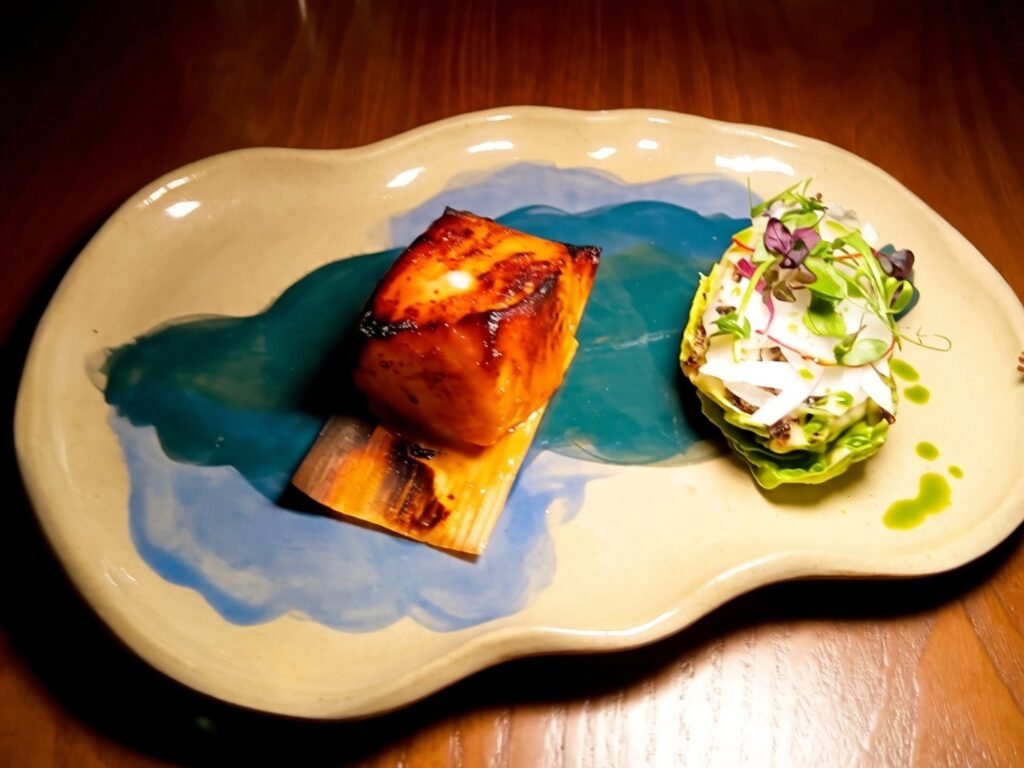
Rich and glossy.
Miso-marinated fish is a modern classic for good reason. The white miso caramelised at the edges and left the sea bass silky and sweet.
Robata anticucho de wagyu. Wagyu skewers from the robata grill. Anticuchos are Peru’s beloved grilled skewers, traditionally beef heart sold at street stalls. Made with wagyu and cooked over the robata, they became smoky, tender and deeply savoury.
Tres leches cake with pistachio ice cream
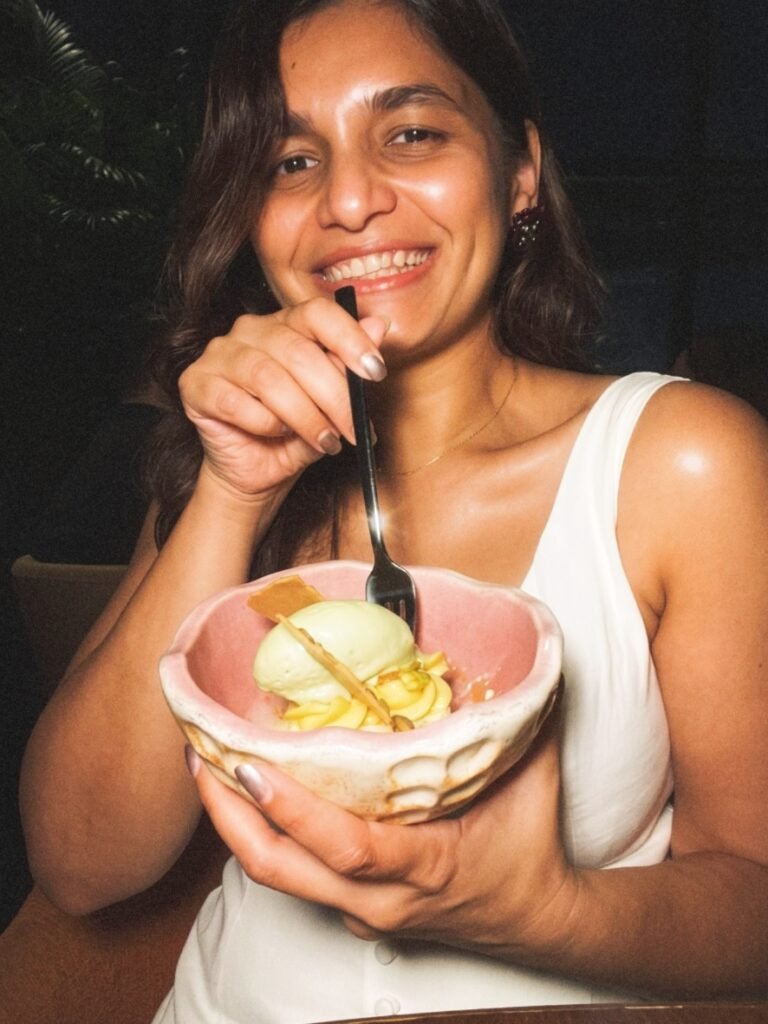
To finish, in that pink bowl.
A sponge soaked in three kinds of milk, served with pistachio ice cream. Soft, cold and sweet, and served in a pink bowl that I am still thinking about.
A short glossary of Peruvian flavours
If you enjoyed this menu, these are the words to look for on any Peruvian or Nikkei menu in Singapore.
Ají amarillo. Peru’s signature yellow chilli. Fruity and warm rather than fiercely hot, it gives many dishes their sunny colour and gentle heat. It is often the backbone of causa and tiradito sauces.
Leche de tigre. Literally “tiger’s milk”, the citrus marinade left over from ceviche: lime, chilli, onion, garlic and the juices of the fish. Bright, salty and sour, it is sometimes served on its own in a small glass as a pick-me-up.
Rocoto. A thick-walled red chilli from the Andes, hotter than ají amarillo, often used in sauces and stuffed whole.
Choclo. Giant Andean corn with large, pale, chewy kernels, a classic side to ceviche.
Pisco. Peru’s clear grape brandy, distilled from wine. It is the base of the pisco sour and a great match for spicy, citrusy food.
Anticucho. Grilled skewers, traditionally beef heart, marinated in vinegar, cumin and chilli. Once a humble street food, now on menus everywhere.
Once you know these, a Peruvian menu stops feeling foreign and starts feeling like a map.
How to get the view right at a rooftop restaurant
Singapore has many restaurants with spectacular views, and the view can either make the evening or distract from it. A few habits help.
Book for the light, not the hour. Sunset in Singapore falls around seven in the evening for most of the year, give or take a few minutes. Book about forty-five minutes before it, so you arrive in daylight, watch the golden hour, and see the city lights come on before the main courses arrive.
Ask for a window table when you book. Not on arrival. Window tables are allocated in advance, and it costs nothing to ask.
Check the weather. An afternoon storm can roll through and clear just in time for a spectacular sunset, or it can sit over the city all evening. If the forecast looks grim, a later booking for city lights may be the better bet.
Photograph early, then put the phone away. Take your pictures at golden hour, when the light is best. After that, the view is for looking at, and the food deserves your attention.
Remember the food comes first. A great view cannot rescue a poor meal. The best rooftop restaurants, and SUSHISAMBA on a guest-chef night is one of them, give you both.
How to order a Nikkei menu
A Nikkei menu can feel overwhelming, with raw, grilled, fried and sushi courses side by side. A little structure makes it more enjoyable.
Start cold and bright. Begin with tiradito, ceviche or causa. Their citrus and chilli wake up the palate and set the tone.
Add the sushi early. Order the nigiri while your palate is fresh, before the richer dishes arrive. The moriawase on this menu deserved full attention.
Then go to the grill. Robata skewers like the wagyu anticucho, and rich fish like the white miso sea bass, are the heart of the meal. Share them so everyone tastes everything.
Order in rounds. Two or three dishes at a time keeps food hot and lets you decide whether you want more.
Drink to match. A pisco sour to begin, then a crisp white or sake with the raw dishes, and something with more body for the grill.
Leave room for dessert. Tres leches is soft, cold and comforting, and it ends a spicy, bright meal perfectly.
Planning your visit
SUSHISAMBA is on level 52 of Capital Tower in the CBD, a short walk from Tanjong Pagar MRT. Book a table near the window and aim for the hour before sunset.
The restaurant keeps a busy calendar of collaborations, guest chefs and special evenings, so check what is coming up before you book. A guest menu like this one is the best way to experience the kitchen at its most creative.
If you are planning a night in the area, the CBD is full of good options for before and after.
Good to know
Where is SUSHISAMBA in Singapore?
On level 52 of Capital Tower in the CBD.
What kind of food does SUSHISAMBA serve?
A blend of Japanese, Brazilian and Peruvian cooking, including sushi, robata grill and Nikkei dishes.
What is Nikkei cuisine?
Japanese-Peruvian cooking, born from Japanese immigration to Peru, combining Japanese technique with Peruvian ingredients like chilli and citrus.
When is the best time to dine at SUSHISAMBA?
Book for golden hour, the hour before sunset, for the best view of the city.
Three continents, one table. Send this to the friend who needs a reason to book a Tuesday dinner, and tell me which dish you would order first.
SUSHISAMBA is among the brands Tania has collaborated with.
More from the magazine
Taniameter
Taniameter. Singapore food, drinks, travel and tables. Follow @taniameter on Instagram.
© 2026 Taniameter. Some links on this site are affiliate links; Taniameter may earn a commission at no extra cost to you.