Dining. Singapore pasta
sio Pasta at Raffles City: a Tokyo Michelin chef, pasta from S$14.80
No flight to Tokyo required. The chef behind sio Aoyama, in the Michelin Guide six years running, now cooks in a Raffles City basement. Italian technique, Japanese instinct.
By @taniameter. Updated November 2026. 10 minute read.
No flight to Tokyo required.
Shusaku Toba is the chef behind sio Aoyama in Tokyo, a restaurant that has appeared in the Michelin Guide six years running. In Singapore, he cooks in a basement at Raffles City, with twenty-eight seats and pasta from S$14.80. It is one of the best-value meals in the City Hall area, and one of the most quietly exciting.
The idea is simple: Italian technique, Japanese instinct. Pasta with an Asian twist can easily go wrong, collapsing into gimmick or confusion. Here, it has rarely tasted this right. The flavours are clean and precise, the portions generous, and the prices refreshingly fair for a chef of this calibre.
My favourites are the soup pasta and the blue cheese, maple and honey pizza, and I have a weak spot for the karaage. Below is the full order, what Japanese-style pasta is, and how to time your visit to avoid the queue.


The chef
Shusaku Toba built his reputation at sio in Aoyama, one of Tokyo’s most stylish neighbourhoods, where his cooking has held a place in the Michelin Guide for six consecutive years. His style is modern, seasonal and rooted in Japanese produce, with a lightness that makes even rich dishes feel refined.
sio Pasta is the casual expression of that cooking. Rather than a tasting menu, it focuses on pasta and pizza, made quickly and served in a small, bright room. It is the kind of place Tokyo does so well: a serious chef applying full attention to everyday food. Raffles City was its first home outside Japan, and it is the original of the two sio Pasta locations in Singapore.
What Japanese-style pasta is
Japan has been making its own kind of pasta for decades. The style is often called wafu pasta, meaning Japanese-style, and it grew up in Tokyo coffee shops and small pasta houses in the second half of the twentieth century.
Wafu pasta takes Italian shapes and techniques and seasons them with Japanese ingredients: soy, butter, dashi, mentaiko, which is spicy pollock roe, shiso, seaweed and mushrooms. Some dishes are creamy and comforting. Others are light, brothy and full of umami. Napolitan, a ketchup-based spaghetti from post-war Yokohama, is the nostalgic classic. Mentaiko pasta, with its salty, creamy roe sauce, is the modern favourite.
Done badly, fusion pasta tastes like neither cuisine. Done well, as at sio, it feels inevitable, as though the two traditions were always meant to meet.
What to order
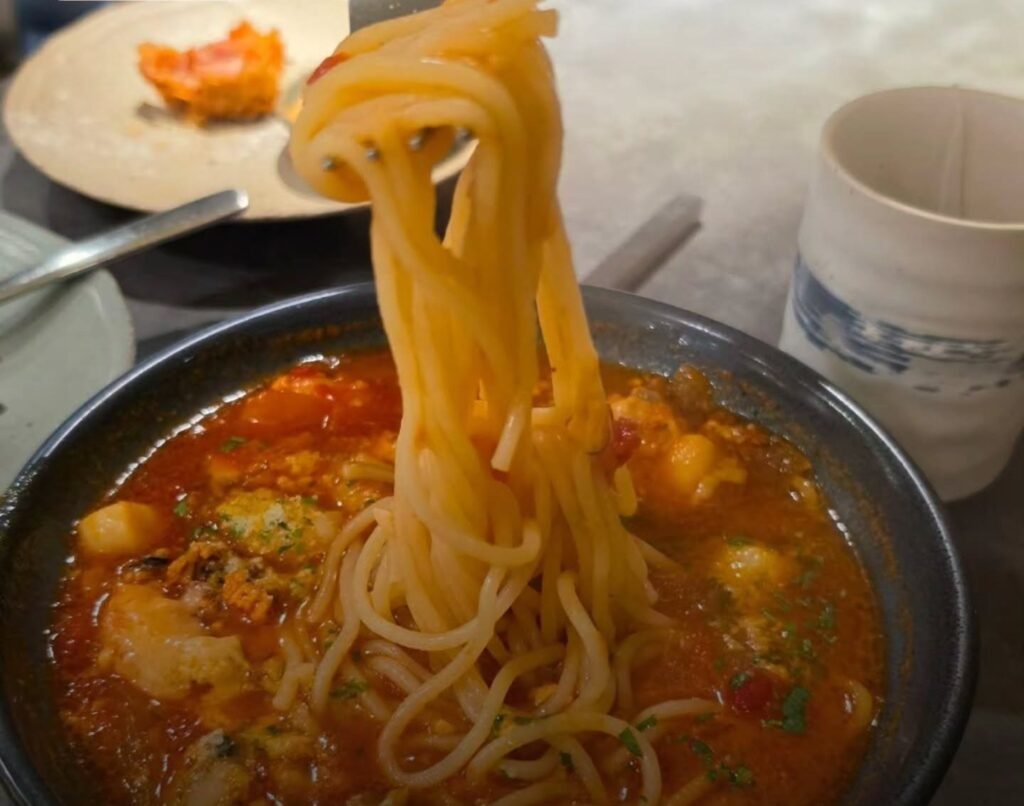
Japanese seafood tomato soup pasta. My favourite. A brothy pasta, rich with seafood and tomato, with the clarity of a Japanese soup. Order this first, and drink the last spoonful straight from the bowl.
The Best Truffle Pasta. S$19.80. The name is confident, and the dish backs it up. Creamy, earthy and satisfying.
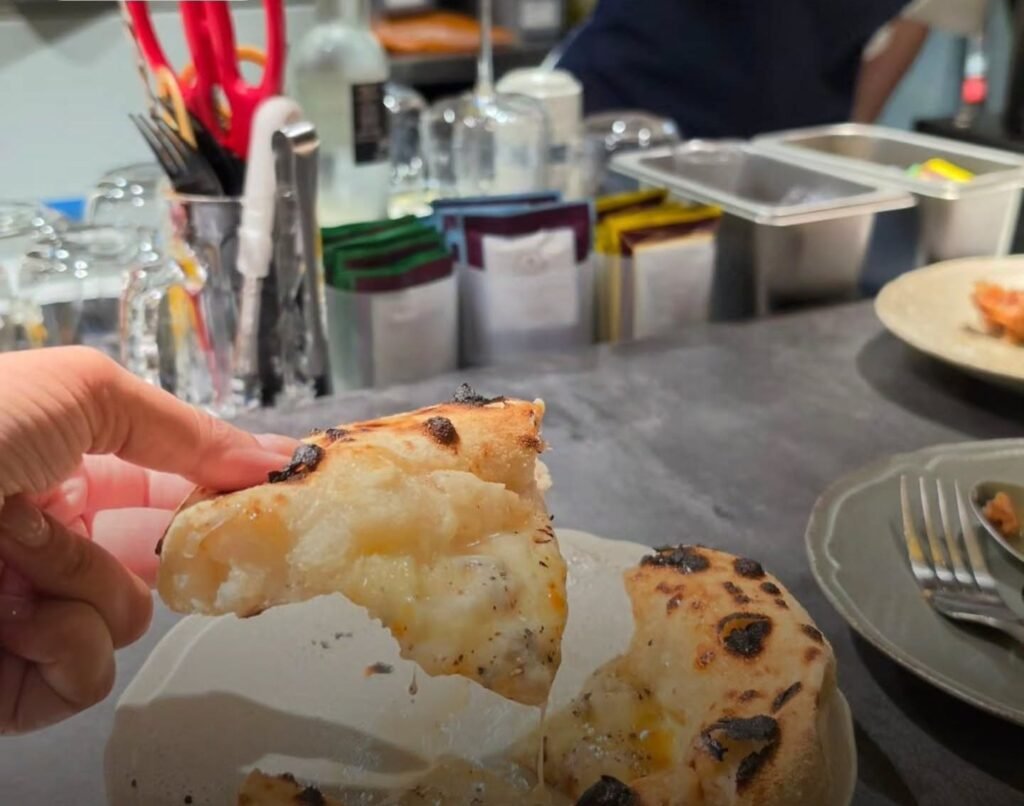
Blue cheese, maple and honey pizza. My other favourite. Salty, sweet and pungent at once. It sounds unlikely and works perfectly, especially shared at the start of the meal.
Potato mentaiko mayo pizza, or unagi egg mayo pizza. The Japanese toppings. Two distinctly Japanese pizzas. The mentaiko version is creamy and gently spicy; the unagi version is sweet, smoky and rich.
Japanese-style fried chicken. S$5.80. The karaage I have a weak spot for. Juicy, crisp and the best side dish on the menu.
Pasta starts from S$14.80, which for a chef with this pedigree is remarkable value.
Five Japanese-style pastas worth knowing
Once you have eaten at sio, you may start noticing Japanese-style pasta on menus all over Singapore. These are the five classics to look for, and what makes each one special.
Mentaiko pasta. Spaghetti tossed with butter, cream and mentaiko, the spicy cured roe, finished with shredded nori. Salty, creamy and gently spicy. The most popular Japanese-style pasta of all, and the flavour behind sio’s potato mentaiko mayo pizza.
Napolitan. Spaghetti fried with ketchup, onion, green pepper and sausage, often served on a sizzling plate. A post-war comfort food from Yokohama coffee shops, deeply nostalgic for many Japanese diners.
Wafu mushroom pasta. Several kinds of mushroom sautéed in butter and soy, sometimes with garlic and a little dashi. Earthy, savoury and simple.
Uni cream pasta. Sea urchin folded into a cream sauce, a luxurious dish that shows how naturally Japanese seafood suits Italian technique.
Soup pasta. Pasta served in a flavourful broth rather than a sauce, closer in spirit to ramen than to Italian pasta. sio’s seafood tomato version is a beautiful example, and the reason I keep going back.
Each of these takes a familiar Italian form and changes it just enough to feel new. That is the quiet genius of Japanese-style pasta, and why a chef like Shusaku Toba makes it look so effortless.
Why the pizzas deserve your attention
It is tempting to go to a pasta shop and order only pasta. At sio, that would be a mistake.
The pizzas follow the same philosophy as everything else on the menu: Italian technique, Japanese instinct. The bases are light and blistered, and the toppings lean into Japanese flavours that most pizzerias would never try. Potato with mentaiko mayonnaise is creamy, salty and gently spicy. Unagi with egg mayonnaise is sweet, smoky and rich. And the blue cheese, maple and honey pizza, one of my two favourite dishes here, balances pungent, salty cheese with sweetness in a way that makes you reach for another slice before you have finished the first.
The best way to order is to share. Two people can split a pizza to start, then order a pasta each, with a plate of karaage for the table. Three or four people can work through two pizzas and most of the pasta menu. In a small room with fast service, it is the most fun way to eat here.
Beating the queue
With only twenty-eight seats, sio Pasta queues at peak hours, especially at weekday lunch when the offices around City Hall empty out.
Go early. It opens at 11.30am daily. Arrive at opening and you will usually walk straight in.
Go mid-afternoon. Between 2.30pm and 5pm is the quiet window. A late lunch here is one of my favourite ways to spend a free afternoon.
Mind the last order. The kitchen takes last orders at 9pm, an hour before closing at 10pm.
Go small. Twos and threes are seated faster than big groups. For six or more, split into two tables or choose another day.
Making a City Hall afternoon of it
One of the pleasures of sio Pasta is where it puts you. Raffles City sits at the heart of the Civic District, a short walk from some of Singapore’s most beautiful buildings.
After lunch, walk out past Raffles Hotel and pretend it was a holiday. The white colonial facade, the gardens and the arcades make it one of the best short walks in the city. From there, the National Gallery, the Padang and the Esplanade waterfront are all within a few minutes.
Both appear in my bars coverage.
Where it sits on my pasta list
sio Pasta is in my top five of the 31 best pasta restaurants in Singapore, and in the new kids group of the same list. It earns that place on value as much as flavour: fast, friendly, and better value than its newer sister in Tanjong Pagar.
Between them, they show how inventive Singapore’s pasta scene has become.
The cheat sheet
| Where | Raffles City Shopping Centre, #B1-16, 252 North Bridge Road. |
|---|---|
| Hours | Daily, 11.30am to 10pm. Last order 9pm. |
| The order | Japanese seafood tomato soup pasta; The Best Truffle Pasta, S$19.80; potato mentaiko mayo or unagi egg mayo pizza; Japanese-style fried chicken, S$5.80. |
| Price | Pasta from S$14.80. |
| The chef | Shusaku Toba of sio Aoyama, Tokyo, in the Michelin Guide six years running. |
| Good to know | Only 28 seats. Expect a queue at peak hours. |
Good to know
Where is sio Pasta in Singapore?
At Raffles City Shopping Centre, #B1-16, 252 North Bridge Road, with a newer sister outlet in Tanjong Pagar.
How much is pasta at sio Pasta?
Pasta starts from S$14.80, and The Best Truffle Pasta is S$19.80.
Who is the chef at sio Pasta?
Shusaku Toba, chef of sio Aoyama in Tokyo, which has been in the Michelin Guide six years running.
What are sio Pasta’s opening hours?
Daily from 11.30am to 10pm, with last orders at 9pm.
Save this for your next City Hall lunch, and send it to whoever you last went to Japan with. More pasta worth crossing town for is on my grid.
More from the magazine
Taniameter
Taniameter. Singapore food, drinks, travel and tables. Follow @taniameter on Instagram.
© 2026 Taniameter. Some links on this site are affiliate links; Taniameter may earn a commission at no extra cost to you.